












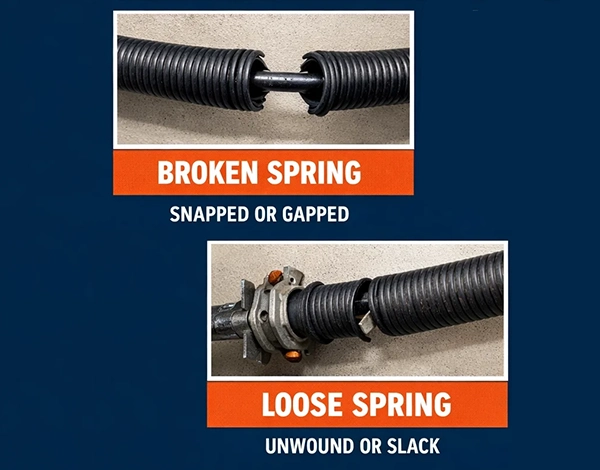
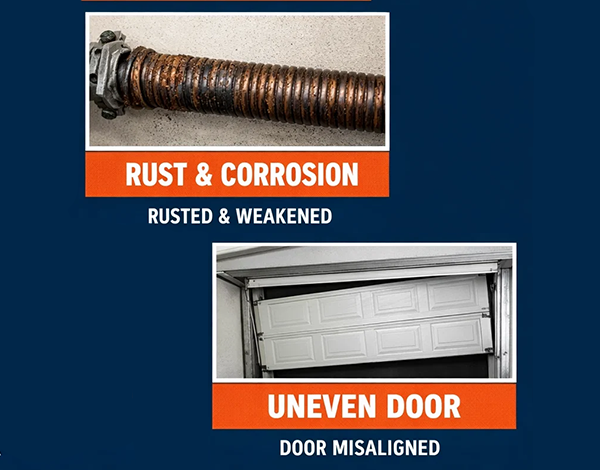





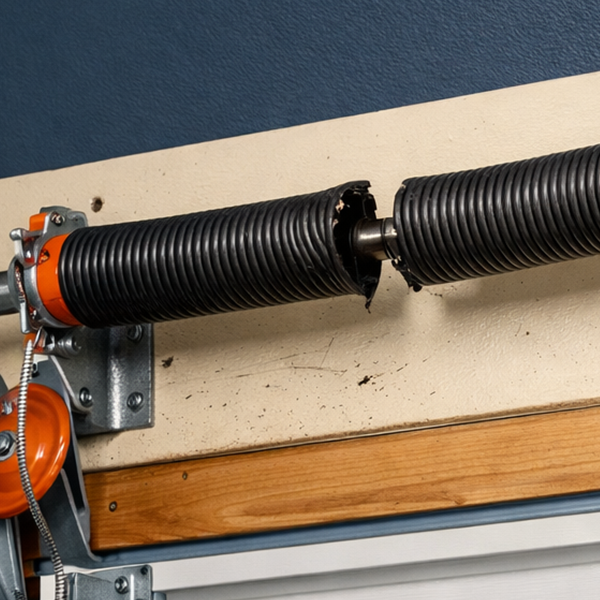
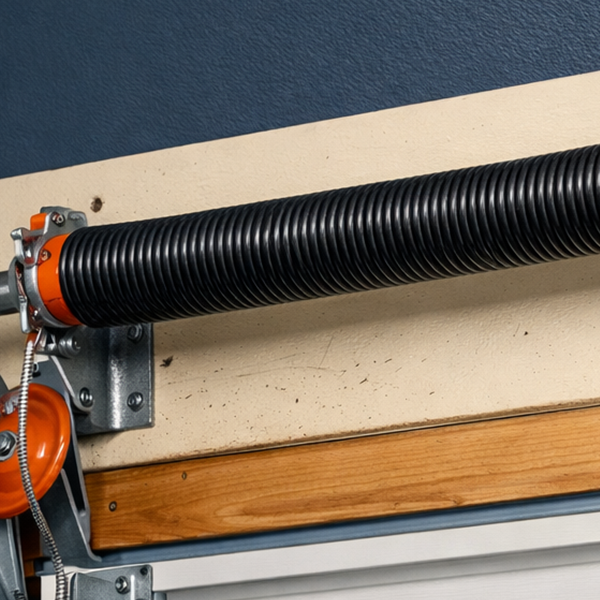

Houston's average humidity of nearly 80% creates a constant risk of rust and corrosion on metal garage door components. Moisture can weaken the steel coils of torsion springs over time, increasing the likelihood of sudden breakage. To reduce this risk, many technicians recommend galvanized or oil-tempered springs and routine lubrication to protect the metal from moisture damage.
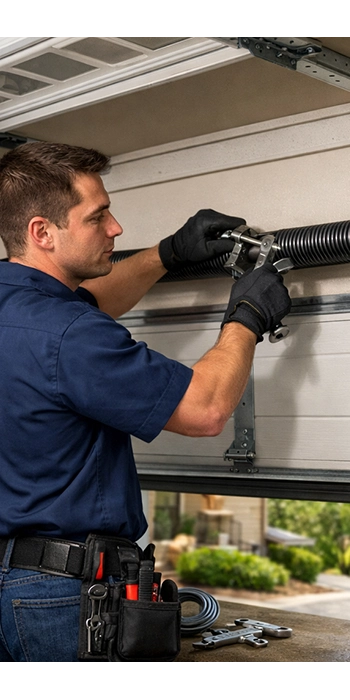
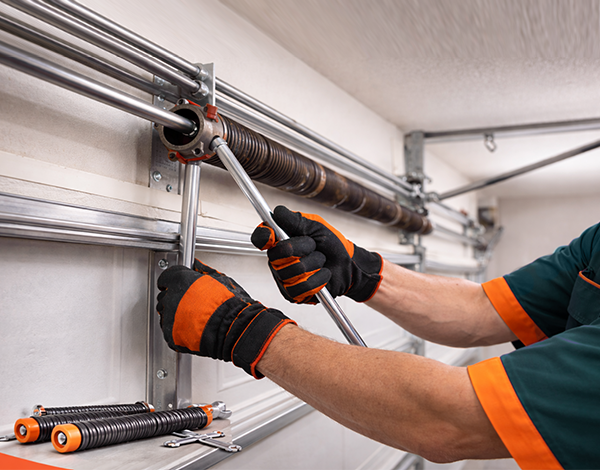
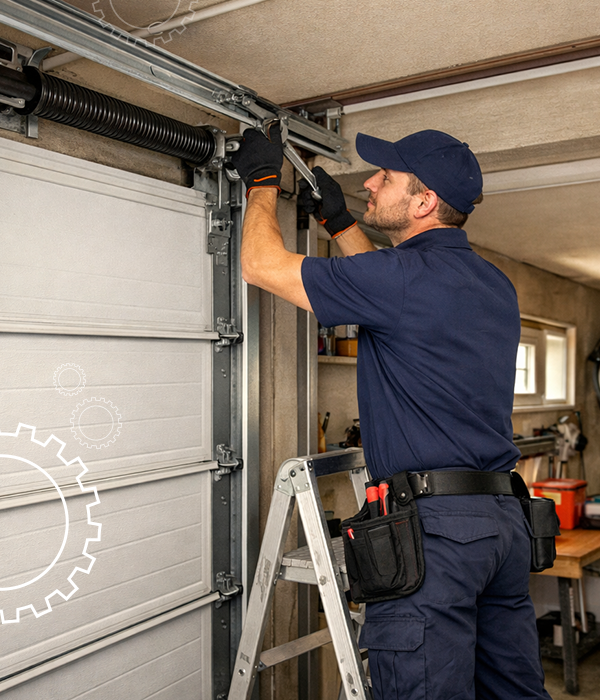
DIY garage door spring replacement is strongly discouraged because these components operate under extreme tension and can cause severe injury if handled incorrectly. Professional technicians use specialized winding bars, safety equipment, and precise balancing methods to safely install new springs. Hiring a trained expert ensures the door remains balanced and safe to operate.
Yes, replacing both springs at the same time is usually recommended. Since they are installed together and experience the same number of cycles, the second spring is often close to failure when the first one breaks. Replacing both ensures proper door balance and prevents additional strain on the garage door opener.
Standard garage door springs are typically rated for around 10,000 cycles, which equals about 7 to 10 years of average use. However, Houston’s humid climate can shorten their lifespan without proper maintenance. Upgrading to high-cycle springs rated for 20,000 or more cycles can significantly extend durability for households that use their garage door frequently.
No, you should not operate your garage door opener if a spring is broken. The opener is designed to guide the door, not lift its full weight. Attempting to run the opener without spring support can burn out the motor, damage gears, or cause the door to fall suddenly. Disconnect the opener using the emergency release and contact a professional technician immediately.